
At a time when youth unemployment and economic exclusion remain pressing challenges across the MENA region, the MENA YES! 2025 Summit, hosted by EFE Global, provided a platform for stakeholders to co-create solutions that meaningfully respond to labour market needs. SPARK co-funded and actively contributed to this year’s discussions through the meso-level component of the EU-funded Green Forward programme, with a specific focus on the role of Business Support Organisations (BSOs) in advancing green and circular economy opportunities for young people.
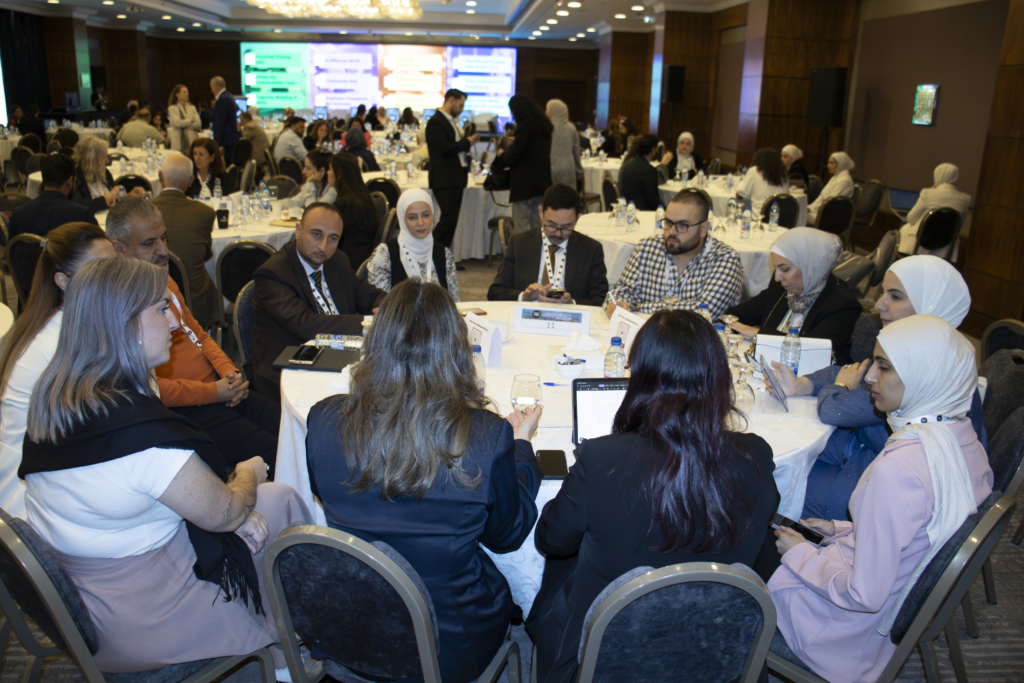
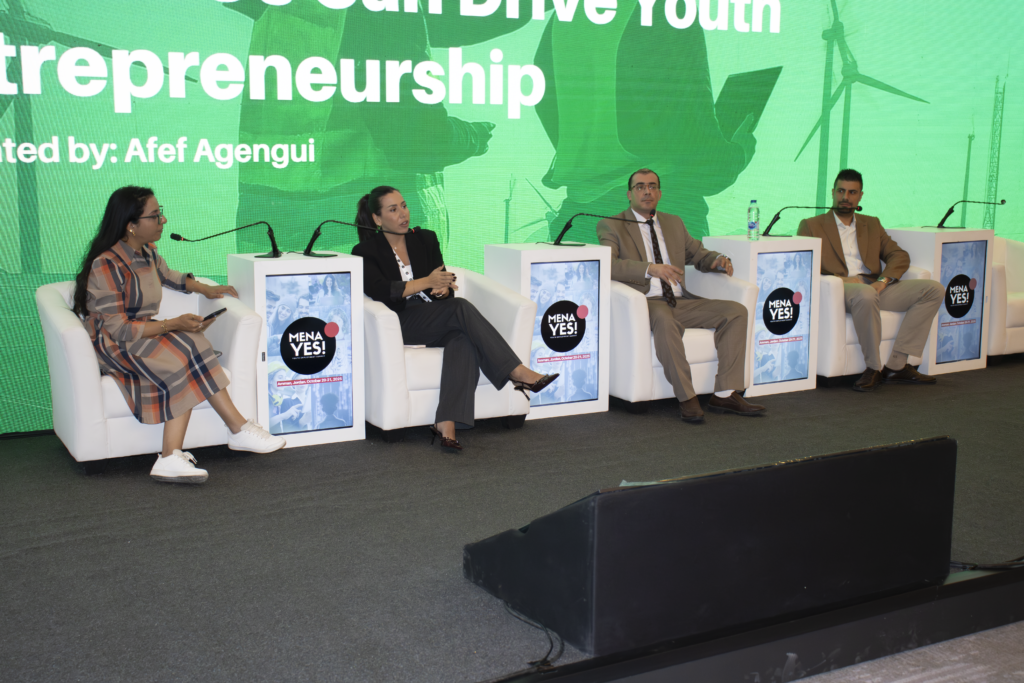
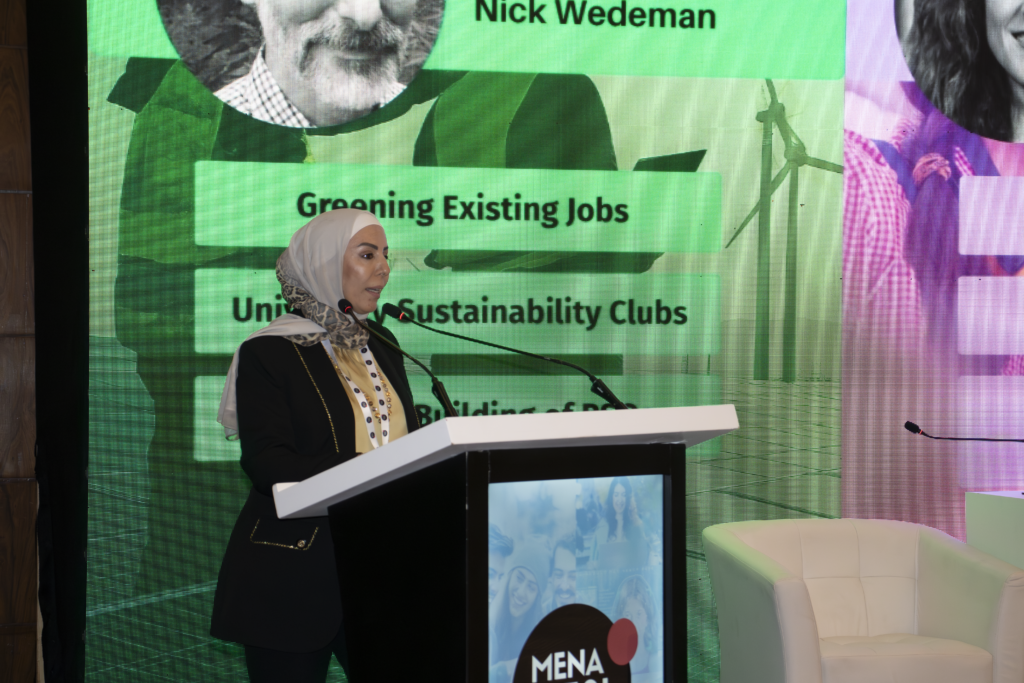
SPARK led a breakout session under the theme “Jobs in the green and circular economy,” designed to identify the needs of young entrepreneurs and develop practical, actionable recommendations for BSOs across the region. Through this session, SPARK engaged partners, youth representatives, and ecosystem actors in examining how BSOs can strengthen their service offering, expand green pathways, and better connect emerging talent to viable economic opportunities.
BSOs: a critical driver for green economic transition
While green jobs and green entrepreneurship are gaining momentum globally, the breakout session revealed that the enabling ecosystem in the MENA region — particularly BSOs — is still evolving. Many youth, refugees, and marginalised communities find the concept of the “green and circular economy” abstract or disconnected from their realities. BSOs are uniquely positioned to bridge this gap, but they require strengthened capacities, clearer tools, and stronger market linkages.
Participants highlighted several systemic challenges that continue to limit the effectiveness of BSOs in enabling youth participation in the green and circular economy. Many organisations still lack a strong understanding of green skills and value chains, reducing their ability to guide young people towards viable green opportunities. Advisory services remain insufficiently tailored to the needs of green start-ups, particularly those led by refugees or rooted in community-based initiatives. Access to suitable finance mechanisms is also restricted, affecting both BSOs themselves and the entrepreneurs they support. In addition, partnerships with employers are often underdeveloped, constraining the creation of pipelines for green employment. Finally, existing curricula and training programmes are frequently misaligned with local labour market needs, which undermines the employability and competitiveness of young graduates.
These gaps reflect a broader need to localise green transition efforts and equip BSOs with the practical tools and incentives to drive system-level change.
SPARK’s contribution: Building BSO readiness for green entrepreneurship through the meso level component of the Green Forward programme
During the summit, SPARK showcased its regional experience in strengthening BSOs to better support green MSMEs through the meso-level component of the Green Forward programme. This approach equips BSOs with practical toolkits and methodologies that help integrate sustainability principles into incubation and acceleration services, while also developing clearer access-to-finance pathways by connecting organisations with impact investors and green financing instruments. SPARK further enhances BSO performance by leveraging its regional partnerships across seven Southern Mediterranean countries to introduce behavioural incentives and targeted coaching that encourage the adoption of sustainable practices within both BSOs and the start-ups they support. In parallel, SPARK supports BSOs in analysing labour market trends, enabling them to orient young entrepreneurs towards viable green value chains rooted in real market demand. These models drew strong interest from participants, who emphasised the urgency of equipping BSOs with tools and insights that can translate green opportunities into tangible livelihoods for youth and refugees.
Key recommendations for BSOs emerging from the breakout session
The session achieved its core objective: identifying practical, actionable recommendations for BSOs across the region. Key takeaways included:
1. Localise green education and awareness
BSOs should work with schools, universities, and community organisations to simplify and contextualise green concepts. Making green transitions relevant to local realities — water scarcity, waste management, energy efficiency — can encourage youth engagement.
2. Align training with labour market and employer needs
BSOs need to co-design curricula with employers, ensuring that training programmes reflect real demand for green skills. This includes mapping local green job opportunities and partnering with companies to create internship and apprenticeship pathways.
3. Strengthen BSO capacity to support green start-ups
Participants called for dedicated training for BSO staff on green business models, green compliance requirements, and sustainable innovation tools. This knowledge is essential to guide early-stage entrepreneurs through viable green value chains.
4. Expand access to finance for green initiatives
BSOs should be equipped to link youth and refugee-led ventures with green financing mechanisms — from micro-grants and blended finance to partnerships with investors interested in climate innovation.
5. Support community-led and informal solutions
BSOs can play a greater role in identifying and legitimising community-based innovations, especially in refugee and low-resource settings where green solutions often emerge informally.
6. Foster cross-border learning and regional networks
Youth and BSOs repeatedly emphasised the value of shared learning. Regional platforms, such as MENA YES!, can help BSOs exchange models, tools, and lessons learned to scale successful approaches.
From recommendations to action
The breakout discussions generated a set of actionable commitments from regional ecosystem actors working to advance green employment pathways. Examples included support from the Jordanian Ministry of Digital Economy and Entrepreneurship to contribute to broader green jobs initiatives drawing on their ecosystem-building experience; Leaders International’s commitment to strengthen BSOs through tailored training and capacity development; and pledges from networks such as the WEF Global Shapers Community – Tunis Hub and Youth Business International to integrate sustainability into youth skills development and promote green entrepreneurship resources. These contributions collectively reaffirm the relevance of empowering BSOs as key facilitators of green and circular economy opportunities across the region.
Advancing BSO capacities for greater youth opportunities
For SPARK, MENA YES! 2025 reaffirmed the central role of BSOs in shaping inclusive, future-ready opportunities for young people. By equipping BSOs with the tools, partnerships, and knowledge they need, the region can build ecosystems where green entrepreneurship thrives — and where youth and refugees are not passive beneficiaries, but active co-creators of sustainable solutions.
As working groups begin implementing the commitments made during the summit, SPARK remains committed to supporting BSOs across the MENA region to drive lasting, system-level change in the green and circular economy.
—
Green Forward is a European Union-funded initiative implemented by a consortium of partners working across three complementary levels:
- Expertise France (at the macro level): leads the development of enabling green policies, legislation, and standards in close collaboration with national authorities and regional stakeholders.
- SPARK (at the Meso level): focuses on strengthening the capacity of Business Support Organisations (BSOs) to act as effective ecosystem enablers.
- UNIDO (at the micro level): supports small and medium-sized enterprises (SMEs) through targeted technical assistance, promoting the adoption of circular economy practices and improving access to green finance.
Related news
-
![]() Event
EventGreen Forward (meso level) conference in Palestine: Exploring the regional trends and local realities of the green and circular economy
-
![]() News
NewsGreen Forward (Meso): Empowering Egypt’s green transition through business support organisations
-
![]() Event
EventBuilding sustainable futures: Erbil forum paves way for localisation in Kurdistan Region
Multi-stakeholder gathering brings together government, local private companies, and civil society to strengthen local ownership and reduce international aid dependency
-
![]() News
NewsPathways to economic recovery in Syria: 10 recommendations from SPARK’s Damascus scoping mission
-
![]() Event
EventPalestine Launchpad Job Fair 2025
-
![]() Report
ReportSPARK 2024: Annual report highlights
The Annual Report provides comprehensive information on SPARK’s activities throughout the preceding year. Published with the approval of the Supervisory…
-
![]() Event
EventJordan hosts Green Forward (meso level) conference 2025 to advance the green and circular economy
-
![]() Event
EventLebanon: Green Forward conference 2025 (meso level) to propel Lebanon’s green and circular economy transition
-
![]() News
NewsKey learnings and insights from the Green Growth Summit Cairo 2025
-
![]()
Advancing the circular economy in MENA: Key takeaways from the first Green Forward webinar
-
![]()
Palestine Launchpad with Google Hackathon Connects Local Talent with Tech Companies
-
![]()
Lebanon’s wastewater crisis needs local solutions: A new policy paper makes the case for decentralised systems
-
![]()
“Work for Work” Campaigners Share Outcomes at Major Press Conference in Sulaymaniyah