
© UNHCR/Pierre Albouy
The landscape for refugees has changed dramatically in the four years since the last Global Refugee Forum. At the start of 2023, the number of refugees globally reached 35.8 million – an increase of 35% in just one year, and doubling since 2016.
This is largely fuelled by new and protracted crises from Ukraine to Sudan, Afghanistan to Venezuela. Yet people are also increasingly forced to flee their homes because of increased exposure to climate risk, enhanced public debt and diminishing international support.
What is the Global Refugee Forum?
The first Global Refugee Forum (GRF) was convened in 2019, to monitor the implementation of the Global Compact on Refugees, to transform the way stakeholders work together in response to the challenges faced by refugees, and by those who host them.
The second GRF takes place this week in Geneva from 13-15 December 2023. The event is the world’s largest gathering in support of refugees and host countries. This year, the Global Refugee Forum is co-convened by five States – Colombia, France, Japan, Jordan and Uganda, and co-hosted by the Government of Switzerland and UNHCR. The Forum unites politicians and diplomats, refugees and refugee-led organisations, UN agencies, development banks, businesses, charities and foundations and many others to focus on four important goals:
- Easing pressure on host countries
- Enhancing opportunities for self-reliance
- Expanding access to third-country solutions
- Supporting the conditions in countries of origin for the safe and dignified return of those who have fled
The GRF is where these commitments are turned into concrete action through ambitious, multi-stakeholder pledges in the form of financial contributions, policy changes, specific programmes or projects, and other types of support.
SPARK’s hopes for this year’s Global Refugee Forum
This year’s Global Refugee Forum needs to ensure economic inclusion and access to livelihood opportunities are improved for refugees around the world. Around 67% of refugees around the world have the right to work, yet less than 50% have access to jobs and business opportunities. Evidence shows that the economic inclusion of refugees and internally displaced persons (IDPs) is a win-win for both the displaced communities and host countries, whereas exclusion is costly.
The world of work is transforming rapidly, with huge labour market shortages across the digital technology and agribusiness sectors, as well as increasing opportunities within green economies. SPARK and its partners innovate to support displaced people and host communities – who are often vulnerable to fragility themselves – with opportunities to develop market-relevant skills, job matching and opportunities to launch startups and scale small and medium-sized enterprises.
We need more multi-sectoral, multi-stakeholder partnerships to further global efforts to ensure displaced communities and host nations can benefit from economic inclusion.
Related news
-
![]() Event
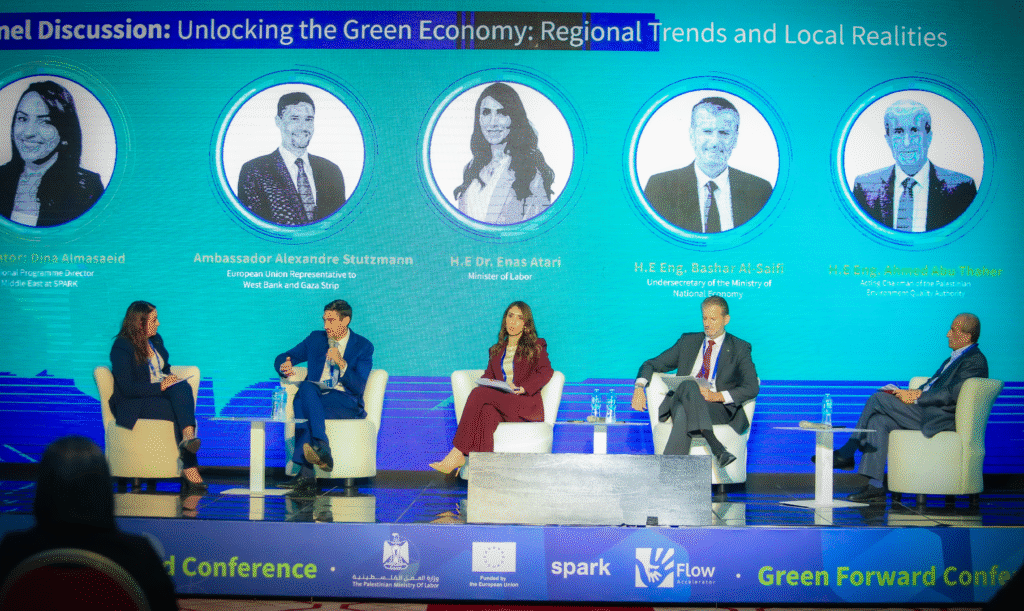
EventGreen Forward (meso level) conference in Palestine: Exploring the regional trends and local realities of the green and circular economy
-
![]() News
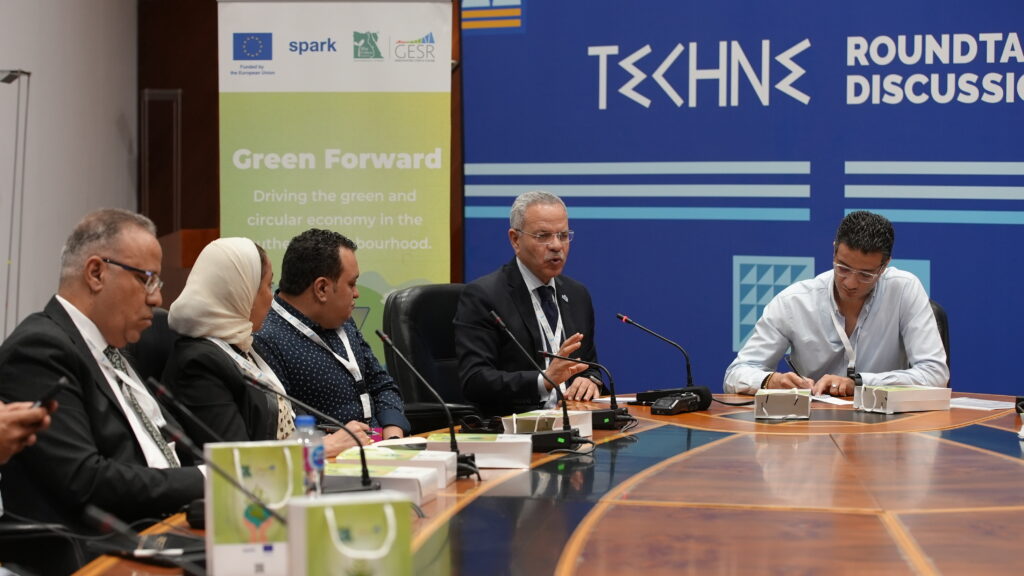
NewsGreen Forward (Meso): Empowering Egypt’s green transition through business support organisations
-
![]() Event
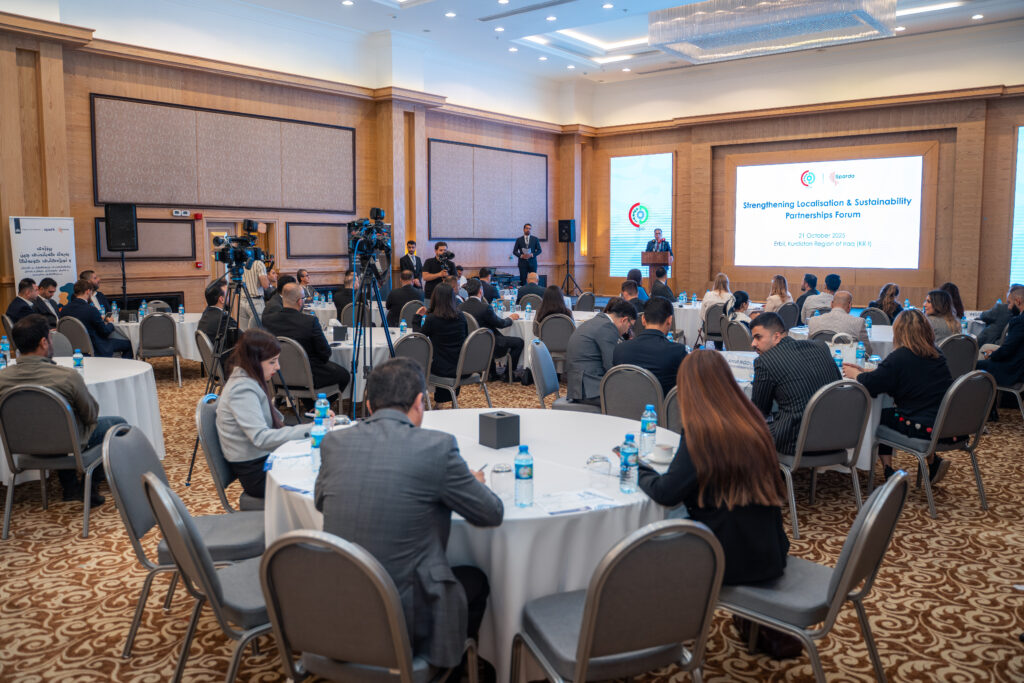
EventBuilding sustainable futures: Erbil forum paves way for localisation in Kurdistan Region
Multi-stakeholder gathering brings together government, local private companies, and civil society to strengthen local ownership and reduce international aid dependency
-
![]() Event
EventSPARK at MENA YES! 2025: Supporting youth in the green economy — The critical role of Business Support Organisations
-
![]() News
NewsPathways to economic recovery in Syria: 10 recommendations from SPARK’s Damascus scoping mission
-
![]() Event
EventPalestine Launchpad Job Fair 2025
Palestine Launchpad Job Fair 2025 Connects 200+ Tech Learners with 20+ Tech Employers at Palestine TechnoPark
-
![]() Report
ReportSPARK 2024: Annual report highlights
-
![]() Event
EventJordan hosts Green Forward (meso level) conference 2025 to advance the green and circular economy
-
![]() Event
EventLebanon: Green Forward conference 2025 (meso level) to propel Lebanon’s green and circular economy transition
-
![]()
Strengthening local synergies to support young entrepreneurs in Burundi
-
![]()
Key learnings and insights from the Green Growth Summit Cairo 2025
-
![]()
Advancing the circular economy in MENA: Key takeaways from the first Green Forward webinar
-
![]()
Palestine Launchpad with Google Hackathon Connects Local Talent with Tech Companies