
From hesitation to impact: Malak Moqbel’s path into AI

-
locationPalestinian Territories
- Services
- Internships
Malak Moqbel recently graduated from Birzeit University with a bachelor’s degree in Computer Engineering, and today she is an AI Software Engineering Intern at iPhase. There, she works on real AI applications and is learning how machine learning solutions are built and brought into everyday products. It is a role she feels ready for, but not one she always felt confident enough to pursue. Her turning point came through the Palestine Launchpad with Google programme, delivered by Google, Udacity, and SPARK.
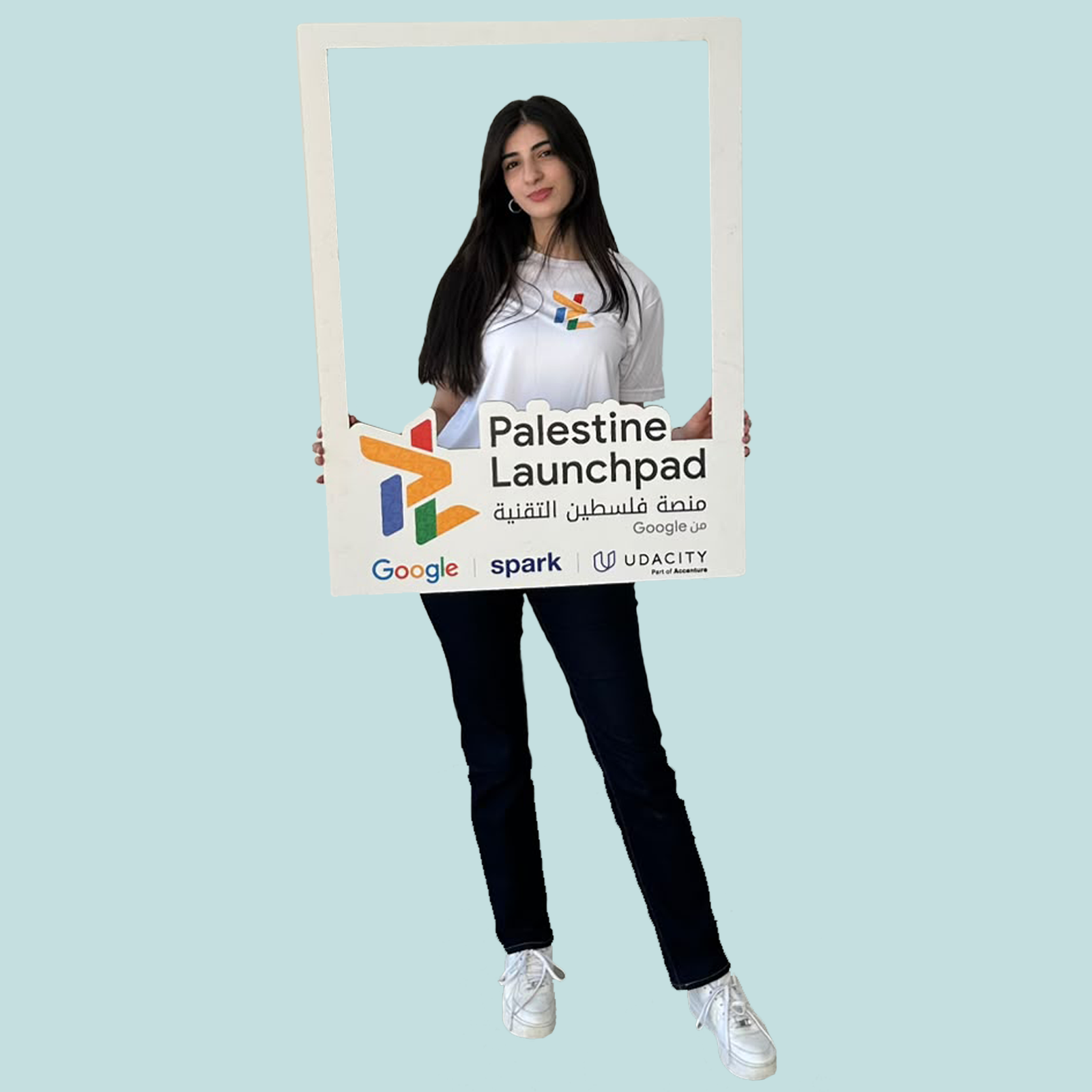
Malak joined the programme to strengthen her technical skills and gain practical experience. The Data Analysis Nanodegree appealed to her.
“It focused on hands-on learning rather than only theory,” she says, and the experience left a strong impression. The programme, she adds, “gave me confidence that I could continue learning independently and build a career in technology.”
Learning by Doing: Moving Beyond Textbooks
The Nanodegree gave Malak a solid foundation in data analysis with Python, from cleaning and organising datasets to analysing them and turning the results into clear visualisations. “Beyond the technical skills, I also developed problem-solving, critical thinking, and attention to detail,” she says, all of which now support her day-to-day work at iPhase.
What stayed with her most was working with real data rather than tidy textbook examples. Learning to make sense of messy, real-world datasets reshaped how she thinks about her field. “Data analysis is about finding insights that support better decisions, not just writing code,” she reflects.
“That practical experience changed the way I approach technical challenges and gave me confidence in applying my skills to real-world problems.”
Giving Back to the Community
Malak also chose to get involved beyond the coursework, volunteering at one of SPARK’s Job Fair events, where she helped organise the day, welcomed participants, and supported the team. “It allowed me to give back to a community that had already invested in my growth,” she says. She valued meeting students, graduates, and professionals, and seeing how such events open doors for young people looking to connect with employers.
For her, that growing confidence is the programme’s deepest impact. She is honest about the hesitation she once felt. “Before joining, I often hesitated to apply for technical roles because I felt I still had a lot to learn,” she recalls. Completing the Nanodegree and continuing to build on those skills changed that, giving her the belief that she was ready for real opportunities.
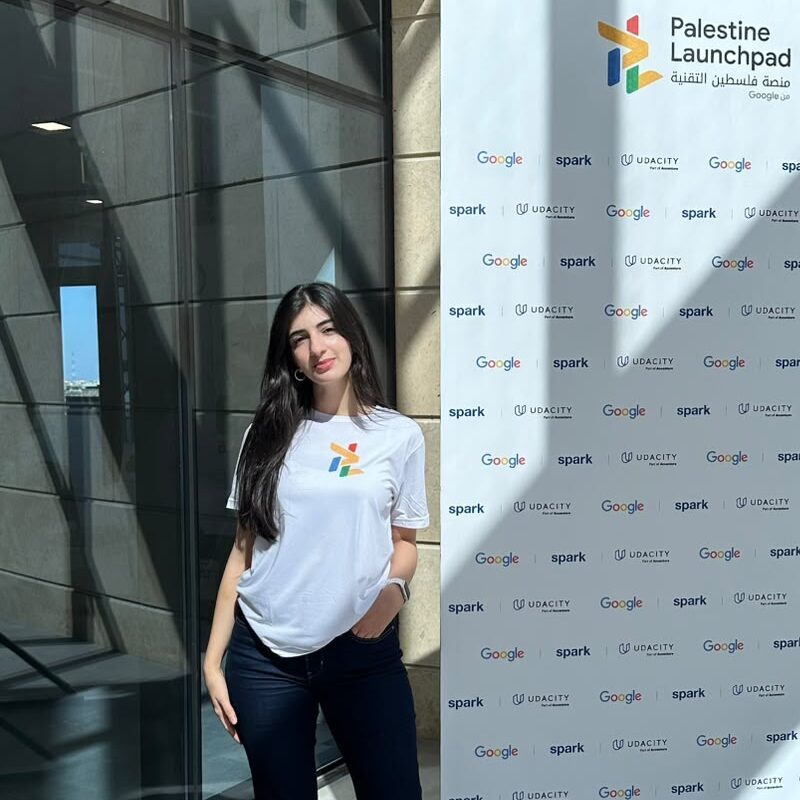
With the programme, Malak’s biggest lesson is that learning does not stop at the end of a course. “I’m grateful for the opportunities that SPARK and the Palestine Launchpad with Google programme provided,” she says. “It gave me confidence, practical skills, and motivation to continue pursuing a career in AI.” She hopes her own path encourages others to follow. Her advice to young Palestinians considering the programme is to make the most of everything it offers, and to keep going:
“Staying curious, asking questions, and continuously challenging yourself are what make the biggest difference. Every opportunity, even volunteering at an event, can open unexpected doors.”