
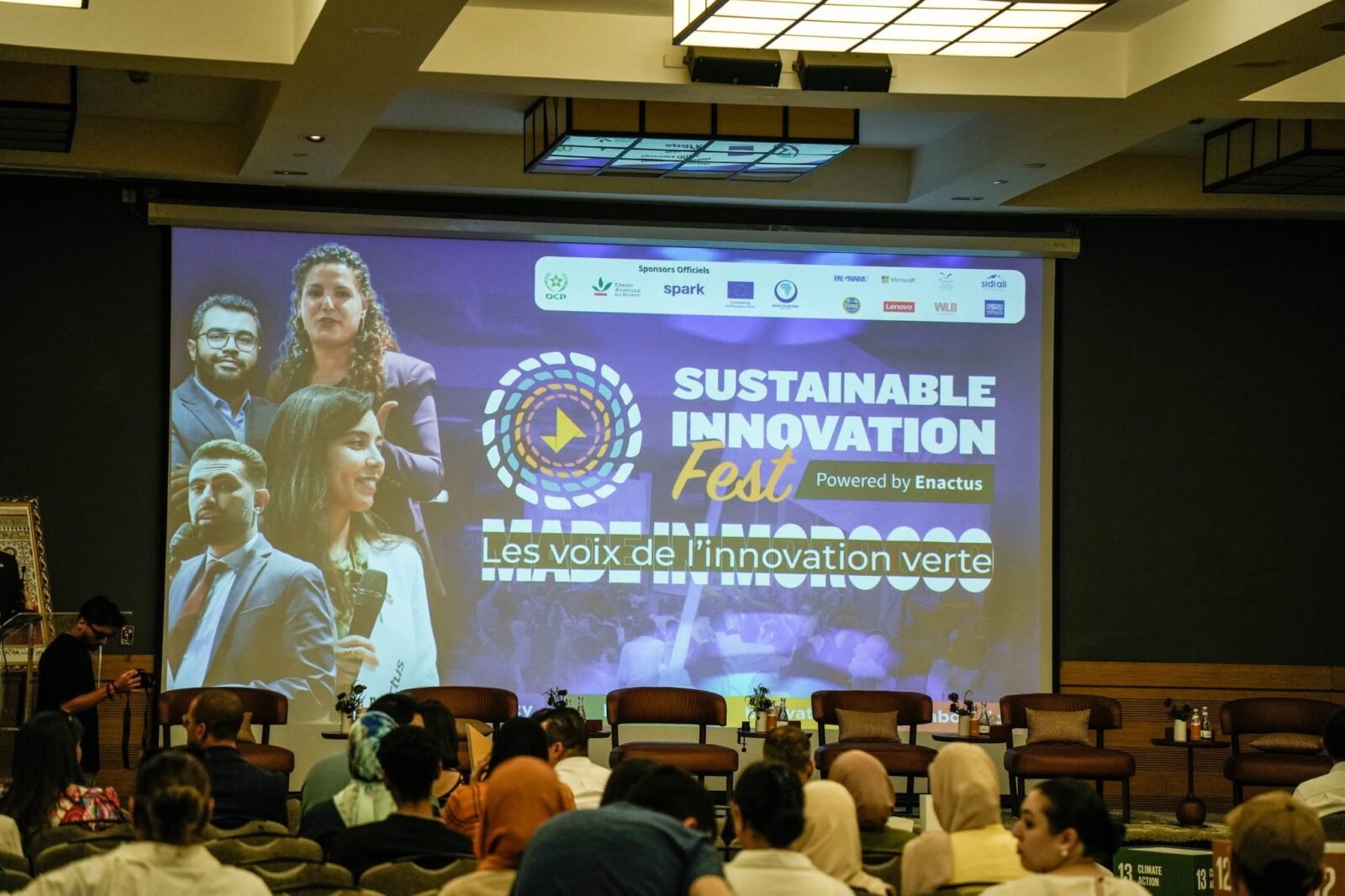
Green Forward launched its meso-level support programme for Moroccan Business Support Organisations in Casablanca, bringing together over 1,300 participants to explore how the country can turn the global Green Tech momentum into local jobs, innovation and resilience. A high-level panel featuring voices from industry, academia, government and the ILO examined the role of finance, skills and inclusive coalitions in driving Morocco’s green and circular economy transition.
From 8 to 10 July 2025, on the occasion of the 6th edition of the Sustainable Innovation Fest (SIF), Green Forward officially launched its meso-level support programme for Moroccan Business Support Organisations (BSOs) in Casablanca, organised in collaboration with Enactus Morocco.
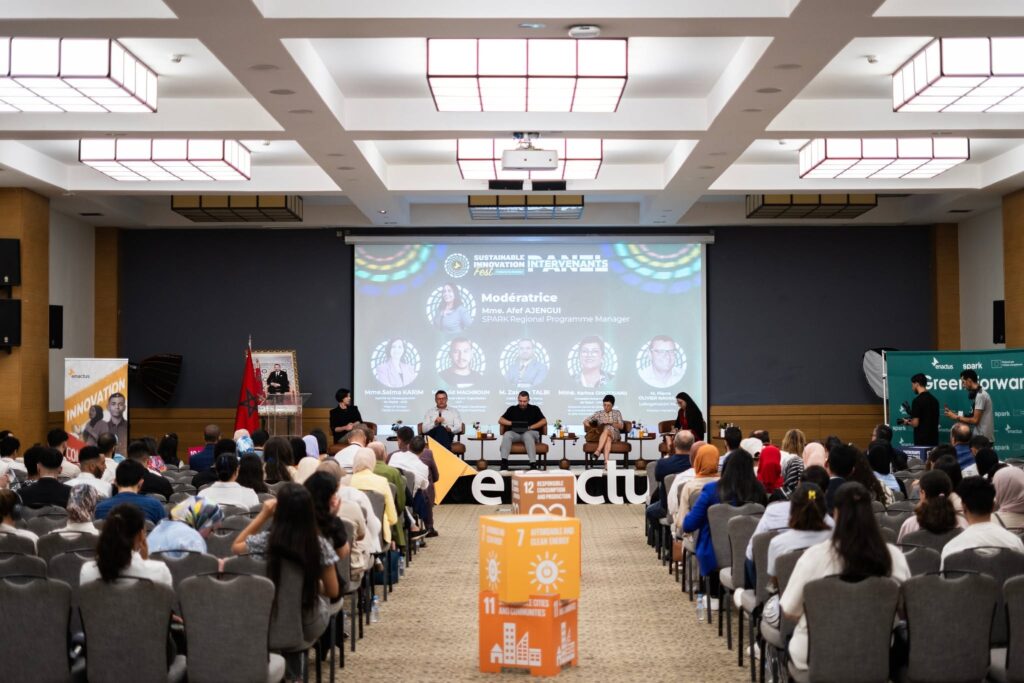
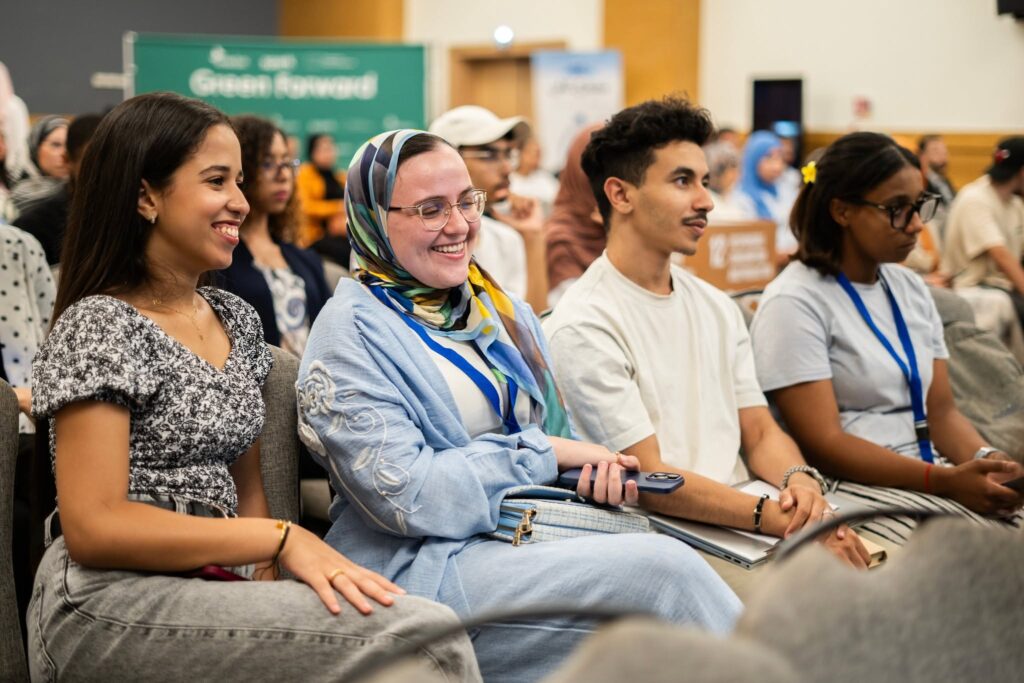
Funded by the European Union and implemented by SPARK at the meso level in partnership with Enactus Morocco, the event marked the start of Green Forward’s mission in Morocco to empower BSOs as key enablers of the country’s transition towards a green and circular economy. The conference brought together more than 1,300 participants over three days, featuring 30 speakers and 20 sessions of panels, competitions, and workshops. Centred on Environment & Climate Change, it showcased how Moroccan youth, institutions, and private sector leaders are actively shaping the country’s green transition.
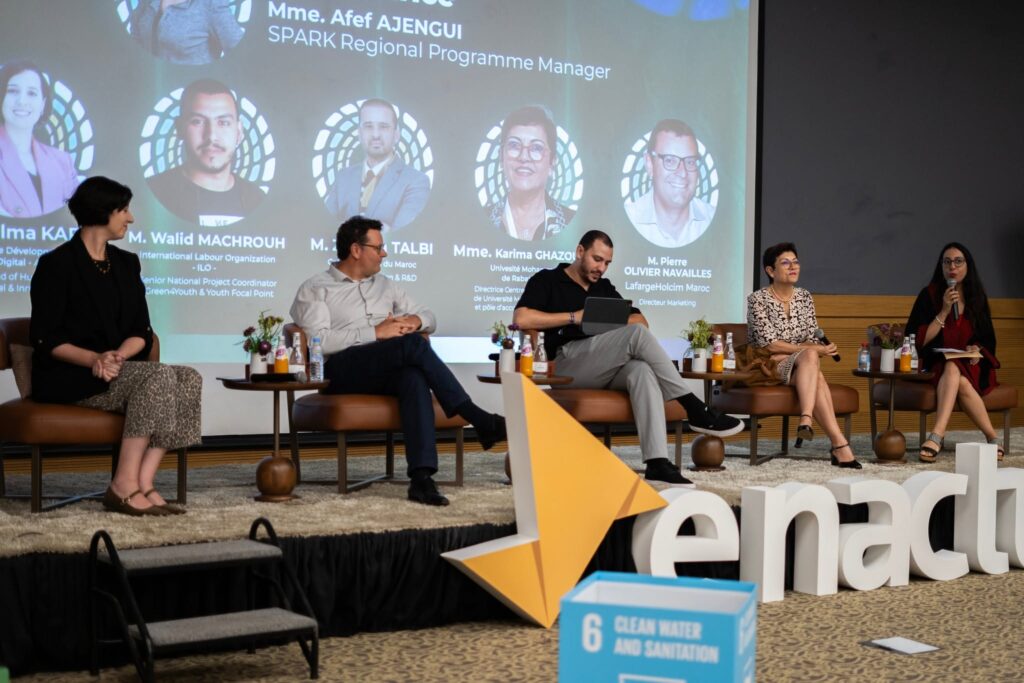
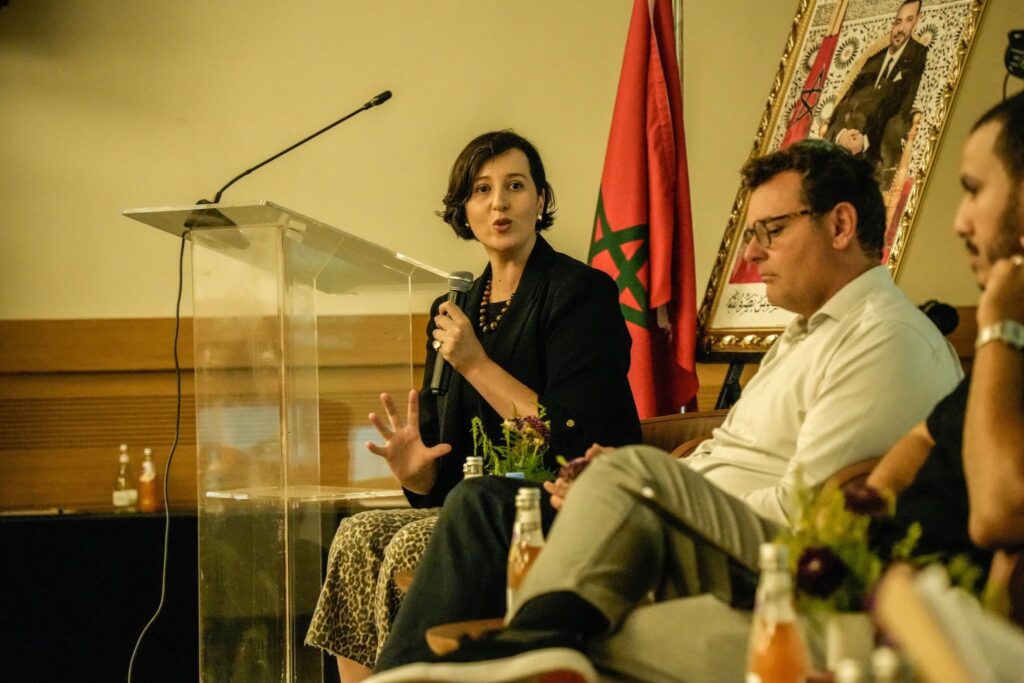
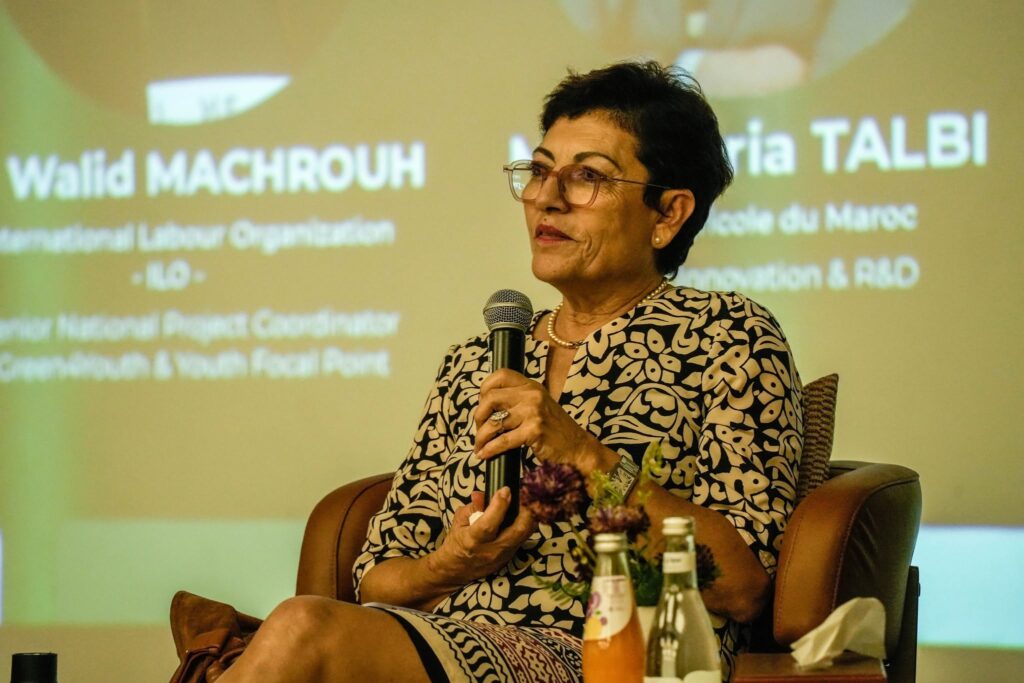
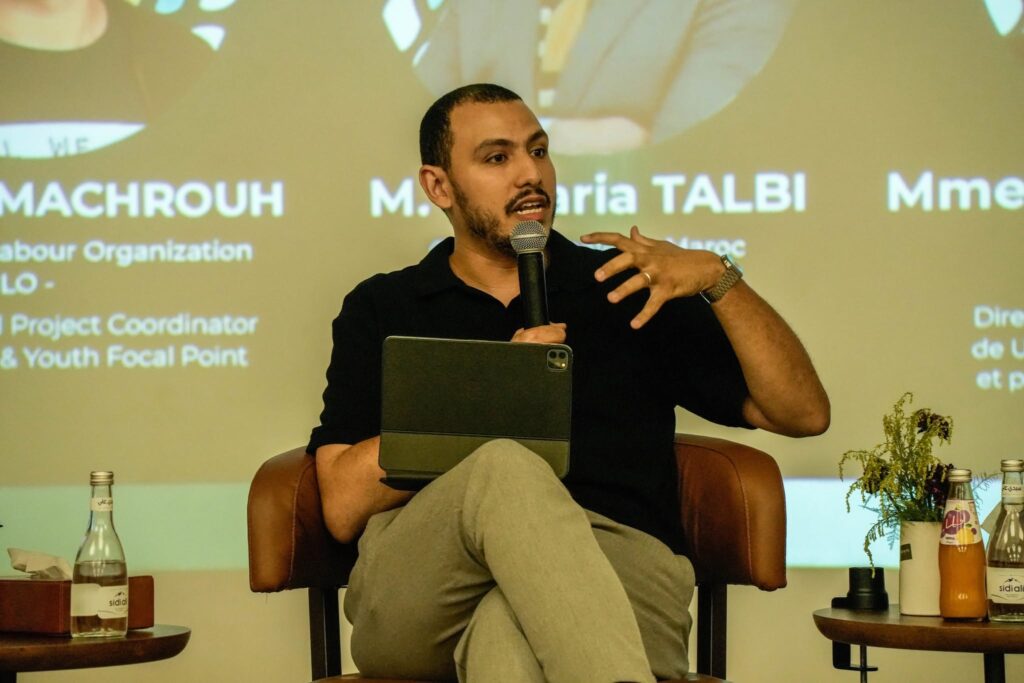
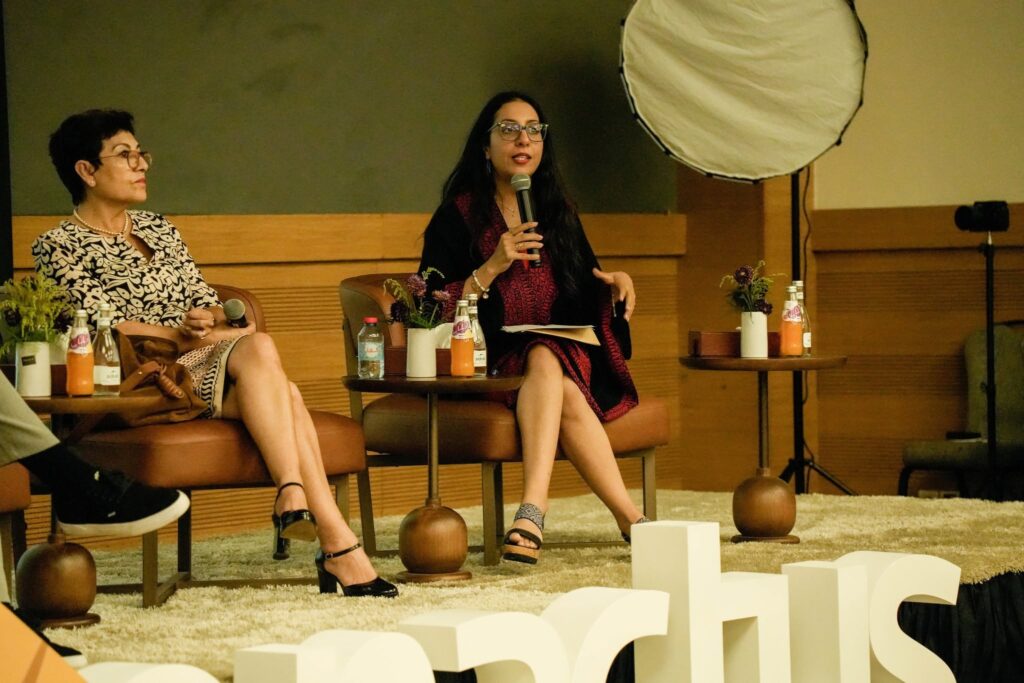
One of the highlights of the Fest was the high-level panel “Green Tech: From Global Trend to Local Opportunity”, moderated by Ms. Afef Ajengui, Regional Programme Manager at SPARK’s Green Forward programme. The session brought together:
- Mr. Pierre Olivier Navailles, Marketing Director at LafargeHolcim Maroc
- Ms. Karima Ghazouani, Director of the University Entrepreneurship Center at Mohammed V University of Rabat (UM5R)
- Ms. Salma Karim, Head of Human Capital & Innovation at the Agence de Développement du Digital (ADD)
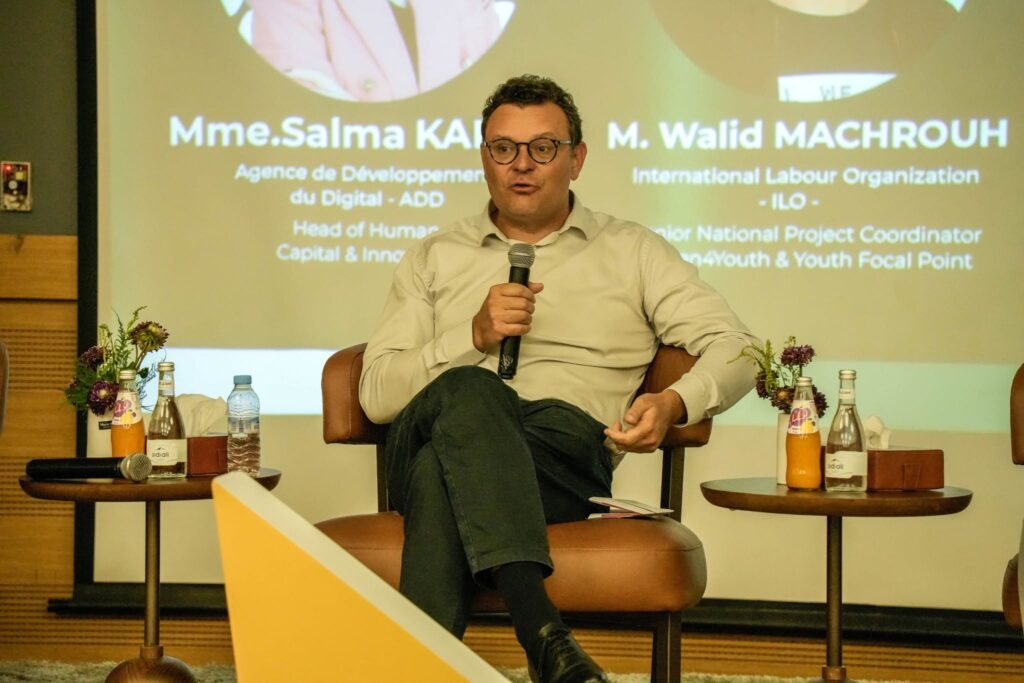
- Mr. Walid Machrouh, Senior National Project Coordinator for Green4Youth & Youth Focal Point at the International Labour Organization (ILO)
Together, they explored how Morocco can translate the global momentum of Green Tech into practical, inclusive opportunities for its economy and communities.
Green economy as more than a global trend
The panel began by reflecting on the global rise of the green economy and Green Tech. Internationally, the sector is projected to create millions of jobs, generate new industries, and reshape economies. Yet the speakers agreed that for Morocco, this trend is not simply about “catching up” with the rest of the world but It represents a strategic pathway towards sovereignty and resilience.
For Morocco, Green Tech is about reducing dependency on imported fossil fuels, enhancing competitiveness in regional markets, and most importantly, creating jobs for its young population. “Green Tech is not a fashion, it is a necessity,” one panelist said. This sense of urgency was shared across the board: Morocco must act decisively to embed sustainability into its economy, not as an accessory but as a foundation.
Industry innovation and reinvention
The private sector voice came strongly through Mr. Pierre Olivier Navailles of LafargeHolcim Maroc, who highlighted that even “hard-to-abate” industries such as cement can no longer delay their transition. He outlined how LafargeHolcim has embraced circular economy models and low-carbon products like EcoPlanet and EcoPact, alongside its pioneering waste-management subsidiary Geocycle, while also exploring collaborations with startups and innovators.
This was an important reminder that industry is not just a source of emissions, but also a critical arena of innovation. For Morocco, the reinvention of key sectors such as construction, energy, and agriculture through technology and partnerships will determine the speed and effectiveness of its transition.
“Decarbonisation is not a burden,” Mr. Navailles explained, “it is an opportunity to redesign our sector and contribute to the competitiveness of Morocco as a whole.” He also acknowledged that the shift requires overcoming significant internal barriers – from high transformation costs to entrenched corporate cultures.
Mr. Navailles added that partnerships with universities and international organisations are increasingly helping the industry rethink processes, proving that large companies can not only reduce their footprint but also catalyse innovation ecosystems.
Universities as incubators of change
Representing academia, Ms. Karima Ghazouani of Mohammed V University underscored the role of higher education in nurturing Morocco’s green economy. She stressed that universities must move beyond knowledge transfer to become incubators of entrepreneurial solutions.
At UM5R’s Entrepreneurship Center, students are being trained to transform innovative ideas into real ventures. Yet challenges remain: bridging research with market needs, mobilising funding, and embedding entrepreneurship into curricula.
“Our students are passionate about climate and sustainability,” Ms. Karima Ghazouani said, “but they need stronger ecosystems to test, fund, and scale their ideas. If we want Green to flourish locally, we must give young people the tools to believe in their solutions.”
Ms. Ghazouani highlighted a recent success story: a student-led Green Tech startup that developed a water-saving irrigation device, now piloted in rural communities. This example, she noted, demonstrates how universities can directly contribute to Morocco’s food security and climate resilience.
Her intervention showed that Morocco’s universities can play a catalytic role, preparing not just future employees but the future founders of Morocco’s green economy ecosystem.
Digital and green: a convergence of transformations
Ms. Salma Karim of the the Agence de Développement du Digital (ADD) emphasised another critical takeaway: the green and digital transformations are inseparable. From smart irrigation systems that save water for farmers, to AI-driven tools for monitoring energy consumption, the future of Green Tech will be built on digital infrastructure.
She pointed out that the ADD is actively investing in digital upskilling programmes, while also building platforms that connect entrepreneurs to markets and funding, and the goal is to make Morocco a regional hub where digital innovation drives sustainability. But this requires equipping the workforce with both digital and green skills.
“There is no Green Tech without digitalisation,” Ms. Salma Karim reminded the audience.
The challenge, then, is to prepare young Moroccans not just for one transformation, but for the convergence of two revolutions at once, and she stressed, calling for joint efforts between public institutions and the private sector to equip young people with both digital and green skills.
Inclusion as a condition of success
Representing the international development perspective, Mr. Walid Machrouh of the ILO offered a sobering reminder: the green transition cannot succeed if it leaves people behind, and he warned against a transition that excludes vulnerable groups:
“The benefits of new industries are captured by a small segment of society, while vulnerable groups remain excluded” – Mr. Walid Machrouh
Through the Green4Youth programme, he explained, the ILO is identifying priority green skills (from renewable energy installation to circular economy business models) and ensuring training is aligned with real labour market needs. The programme also supports startups through incubators, though challenges such as limited access to finance and markets remain. Crucially, Green4Youth places a strong emphasis on inclusion of women and youth, embedding gender and equity considerations into every stage.
“The green economy cannot succeed if it is not inclusive,” he said.
He called for synergies between development organisations, BSOs, banks, and public institutions to ensure that the green transition generates both jobs and justice.
He also emphasised that Morocco must design policies that deliberately create decent jobs for youth, women, and vulnerable groups, integrating them into the new industries of tomorrow, and by embedding inclusivity from the start, Morocco can ensure that green economy is not only an engine of growth, but also a driver of social justice.
Finance as an enabler of green innovation
The panelists collectively underlined that access to finance remains one of the biggest hurdles for Green Tech startups in Morocco. While entrepreneurs are increasingly developing innovative solutions, their ability to scale is often constrained by limited capital and risk-averse financial markets.
Speakers stressed the importance of designing dedicated green financing instruments such as preferential loans, guarantee schemes, and blended finance mechanisms that can help de-risk early-stage investments. They also noted that financial support should not stop at entrepreneurs but should also extend to Business Support Organisations (BSOs), which play a crucial role in nurturing and structuring the ecosystem.
The challenge, they agreed, lies in adapting financing criteria to the realities of green innovation, which typically involve longer development cycles and higher upfront risks compared to traditional business ventures.
“If we want Morocco’s Green Tech ecosystem to scale, we need financing models that match its specific needs,” the panel concluded, emphasising the importance of aligning financial institutions with the innovation cycle.
Building coalitions across sectors
Throughout the discussion, one idea came up repeatedly: the green transition cannot be driven by any single actor. Government policies may provide the framework, but without the alignment of BSOs, universities, financial institutions, industries, international organisations, and entrepreneurs, change will remain fragmented.
Moderator Ms. Afef Ajengui closed the session by insisting on the need for coalitions across sectors and generations.
“Global trends only matter when they are translated into solutions for our communities. Morocco has the ambition, the resources, and the talent. What we need now is to connect these pieces and work together,” she concluded.
The panel concluded with a shared optimism. Morocco has all the elements in place to become a regional leader in green economy and innovation: abundant renewable resources, a dynamic pool of entrepreneurs, strong academic institutions, and growing international partnerships. The challenge now lies in ensuring that these elements are connected, aligned, and scaled.
Panel’s key takeaways
- Green Tech is a global driver of growth: the International Labour Organization estimates that a shift to a greener economy could create 24 million new jobs globally by 2030, and Morocco has the potential to seize this opportunity. (ILO, 2023).
- Finance is crucial: banks and investors must design green instruments that de-risk innovation for SMEs and startups.
- Skills and inclusivity matter: without investment in human capital and targeted support for youth, women, and vulnerable groups, the transition will leave many behind.
- Policy and industry alignment: Morocco’s climate commitments must be backed by practical collaborations between government, industry leaders, and entrepreneurs.
- Coalitions are key: the green transition will only succeed if BSOs, public institutions, private sector, international organisations, and civil society work hand in hand.
Through Green Forward meso-level intervention in Morocco, SPARK – in partnership with Enactus Morocco and with financial support from the European Union – strengthens the country’s green ecosystem, supporting BSOs to empower young innovators to turn global sustainability trends into local opportunities that create jobs, build resilience, and advance a green and circular economy.
Green Forward is a European Union-funded initiative implemented by a consortium of partners working across three complementary levels:
- Expertise France (at the macro level): leads the development of enabling green policies, legislation, and standards in close collaboration with national authorities and regional stakeholders.
- SPARK (at the Meso level): focuses on strengthening the capacity of Business Support Organisations (BSOs) to act as effective ecosystem enablers.
- UNIDO (at the micro level): supports small and medium-sized enterprises (SMEs) through targeted technical assistance, promoting the adoption of circular economy practices and improving access to green finance.
Related news
-
![]() News
NewsGreen Forward: Key insights from the regional launch event on green and circular economy
-
![]() News
NewsThe EU, SPARK, UNIDO, and Expertise France set a vision for a green economy in the Southern Mediterranean region through the“Green Forward” initiative
As part of the IGNITE conference in Amman, Expertise France, SPARK, UNIDO, and the European Union introduced the Green Forward…

